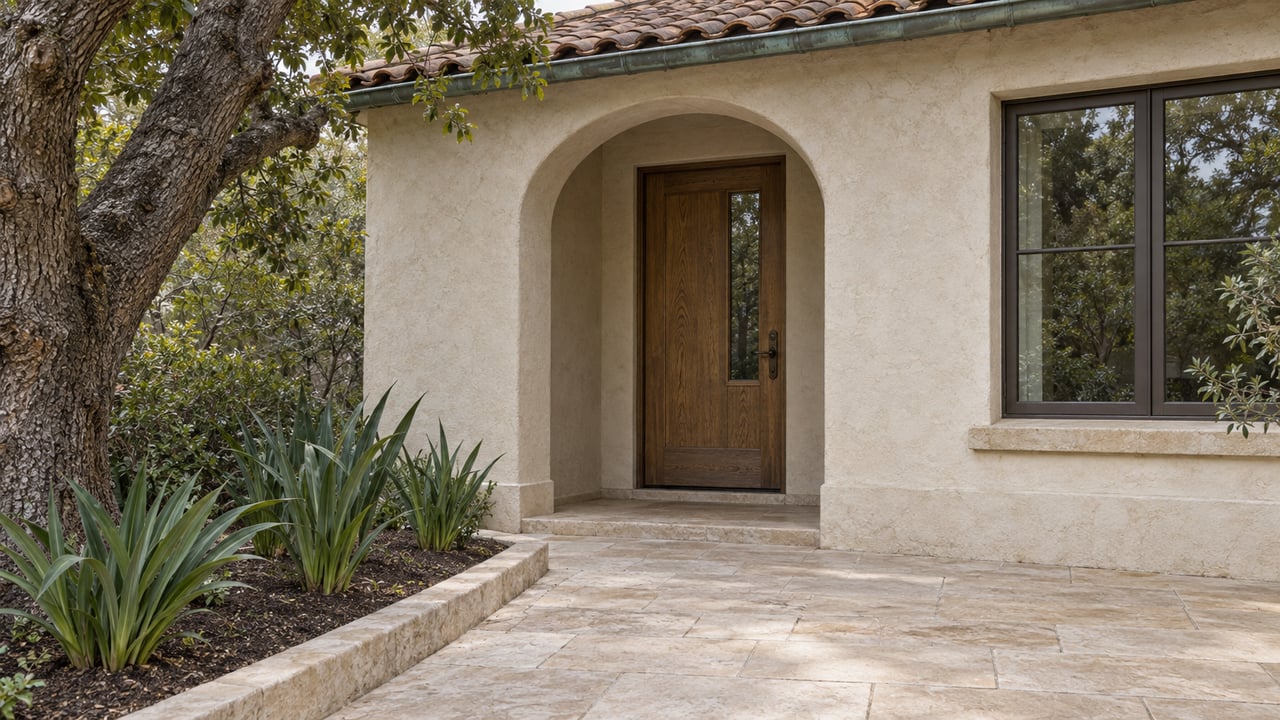
Say someone on San Carlos Street calls 911 and can't remember their new number. They might only manage "two houses south of Eighth." The dispatcher still knows the house is 817 San Carlos St. Acting city administrator Brandon Swanson described that test to the Carmel Pine Cone in September. Getting it right is a big part of why the rollout took longer than the city expected.
The numbers are now up across the village. City Hall's went up on a Thursday in early September, so the building that wrote the old rule is now 662 Monte Verde St. Swanson called it "a momentous occasion." Look at what the system connects to and what it leaves alone, though, and a pattern shows up. The new numbers are mostly for emergency crews, county records and utilities. Daily life still goes through the P.O. box.
The Rule That Lasted a Century
Early Carmel was sparsely settled, and cottages went by poetic and sometimes ironic names. Directional addresses such as "Camino Real 3 SE of Ocean" lasted as the town grew. Eventually they became law. The municipal code said properties "shall be identified by a description of parcel location relative to the nearest cross-street intersection."
Residents argued about it for decades. The pressure came from systems that needed to verify a physical address, and from the California Fire Code, which requires standardized addresses displayed where they can be seen. Earlier city councils held off and talked about putting it on the ballot. The vote came in October 2025. A committee of city staff, a councilman and a few residents spent six months researching the question, and then the council voted unanimously. The Pine Cone reported applause and cheering, not protest.
The Pine Cone's editorial page compared Carmel with West Virginia. That state spent decades giving rural homes street numbers so 911 dispatchers could find them, and resistance there never fully went away. In Carmel, the paper wrote, opposition had become "practically nonexistent." It credited a citizen-led working group that spent months holding workshops and answering specific fears. It also pointed out that traditions like no traffic lights and no mail delivery are still in place.
That last point explains why the debate died down. The change asked residents to give up very little in their daily routine.
Where the Work Actually Went
Most of the delay came from systems behind the scenes. City staffers Emily Garay and Bermudez assigned an address to every building. They then worked with Monterey County to load the system into county departments and make sure it worked for police, fire and other public safety agencies. The county review was supposed to take two months and took twice that.
"The process did take longer than we had expected. That was attributed to all of the different agencies and partners that were involved in the rollout, and they all wanted to make sure their systems were in place, because it was a big lift for everyone."
Brandon Swanson, acting city administrator, to the Carmel Pine Cone
Part of the extra time, Swanson said, went to making "double-triple sure" the switch wouldn't cause problems in an emergency. The finished data then went to the U.S. Postal Service for its address management system, which is used to verify addresses.
The utilities were handled the same way. The city's street address page says it gave the approved address data to PG&E, Comcast, CalAm Water and GreenWaste, and that residents don't need to contact those providers "at this time." The Pine Cone did describe one odd conversation the change can cause. You may have to explain to a Comcast representative that your service location hasn't changed even though your address has.
The Part That Stayed Exactly the Same
Mail delivery hasn't changed. The city's FAQ, updated in May 2026, says there will be no home delivery and that P.O. box delivery remains the only standard mail service. In September the Pine Cone put it plainly: "People who live in Carmel will continue going to the post office."
That creates one practical risk. Someone may see your new street number and mail something to it. Garay explained how the Postal Service is treating that:
"USPS officials informed us that there is typically a grace period of three to six months in which the local post office may attempt to catch and redirect mail accidentally sent to a new physical address to a P.O. box. However, this grace period is not guaranteed or automatic, as it depends on post office staffing levels and workload."
The city also says residents shouldn't use their new physical address to receive mail. The street number identifies your house. Your P.O. box is still your mailing address.
Ballots work the same way. Monterey County's elections department sent Carmel residents a postcard marked "ACTION REQUIRED" asking them to update their voter registration with the new street address. Some people worried about the Nov. 3 election. Swanson answered them directly: "Some people think they need to update their address to get their ballot. But they do not have to do that. The ballot will come to your P.O. box regardless of whether you do anything."
What Owners Are Expected to Do
What the system asks of each household is short. Based on the city's materials, here it is in order:
- Find the postcard. The city mailed official address cards to residents and property owners. They show the assigned address and display guidelines, and the city planned a second mailing so nobody would miss it. If yours didn't arrive, the city's street address page links to an assignment map where you can look up your number.
- Ask in person if you need to. Swanson said city staff would have iPads at a booth at the Thursday farmers market for at least a few weeks after the rollout.
- Notify tenants on multi-unit properties. Owners have to tell tenants about the change and post unit identifiers.
- Put the number up. The city's August 2026 display guidelines cover how, summarized below.
| Requirement | What the city's guidelines say |
|---|---|
| Characters | Arabic numerals or letters, not spelled-out numbers |
| Size | At least 4 inches high, with a minimum ½-inch stroke |
| Contrast | Enough to be seen by day and at night |
| Placement | Visible from the public street, on the front façade, entry gate or a street-facing wall |
| Hidden houses | An approved sign at the property frontage if the building can't be seen from the street |
| Wildland Urban Interface areas | Reflectorized numbers on residential properties in mapped WUI areas |
| House name signs | Allowed within existing sign code limits, but they don't replace the number |
| Deadline | Numbers go up on existing buildings after the ordinance takes effect; no calendar date is given |
The house name sign rule is the one most likely to matter on a Carmel lane. A cottage that has gone by a carved name for generations can keep the sign. The guidelines just require an assigned number, at least four inches high and visible from the street, on the house as well. The old rule gave every house a location described in words. The new rule gives every house a number that systems can read, and leaves the name to the owner.
One open item: the city said it would hold a day-long drop-in session so residents could update information with Cal Am, PG&E and other utilities in person. When the Pine Cone reported it in September, Swanson didn't have a date or location yet. Since then, the city's address page has said the data already went to those providers. Check the page before making calls you may not need.
Numbers Already in the News
The new addresses are already showing up in local coverage. The Pine Cone's report on the old Forge in the Forest site gave its address as 511 Junipero Ave. That's where city crews moved the old forge to Flanders while the site was prepared for chef Justin Cogley and partner Janet Elarmo's next venture. The San Francisco Chronicle identifies the project as Corner Market, a 5,000-square-foot restaurant planned for lunch and dinner, with an emphasis on seafood and seasonal produce.
Fall event listings use numbers too. The Carmel International Film Festival's final day is today, October 4, at Golden Bough Playhouse's Founders Theatre, 851 Monte Verde St. Sunset Center's free Centennial Community Celebration is listed for Sunday, Oct. 25, from 1 to 4 p.m., at 908 San Carlos St.
The rest of the city's fall calendar falls in the first months of the new system:
- Saturday, Oct. 10, 4 to 7 p.m.: Meet the Makers Wine Walk, with gallery visits, artists and local wine; tickets are $50
- Saturday, Oct. 24: the 11th Annual Pumpkin Roll
- Friday, Oct. 30: Carmel's Halloween Parade
- Saturday, Oct. 31: a celebration of Carmel's 110th birthday
- Wednesday, Nov. 11: the annual Veterans Day ceremony
- Saturday, Nov. 21: the 55th Homecrafters' Marketplace
The city notes that event dates can change. On Oct. 31, Carmel celebrates its 110th birthday with every building numbered for the first time, no traffic lights, and mail still going to the post office.
Questions about a new address often come up in a sale, and the details matter there, from how the number appears on records to how a cottage name fits alongside it. If you're thinking about what the change means for your property, Riese Real Estate Group can walk through it with you. Schedule a free consultation.
This article is general information, not legal, tax or financial advice. Consult a qualified professional about your situation.