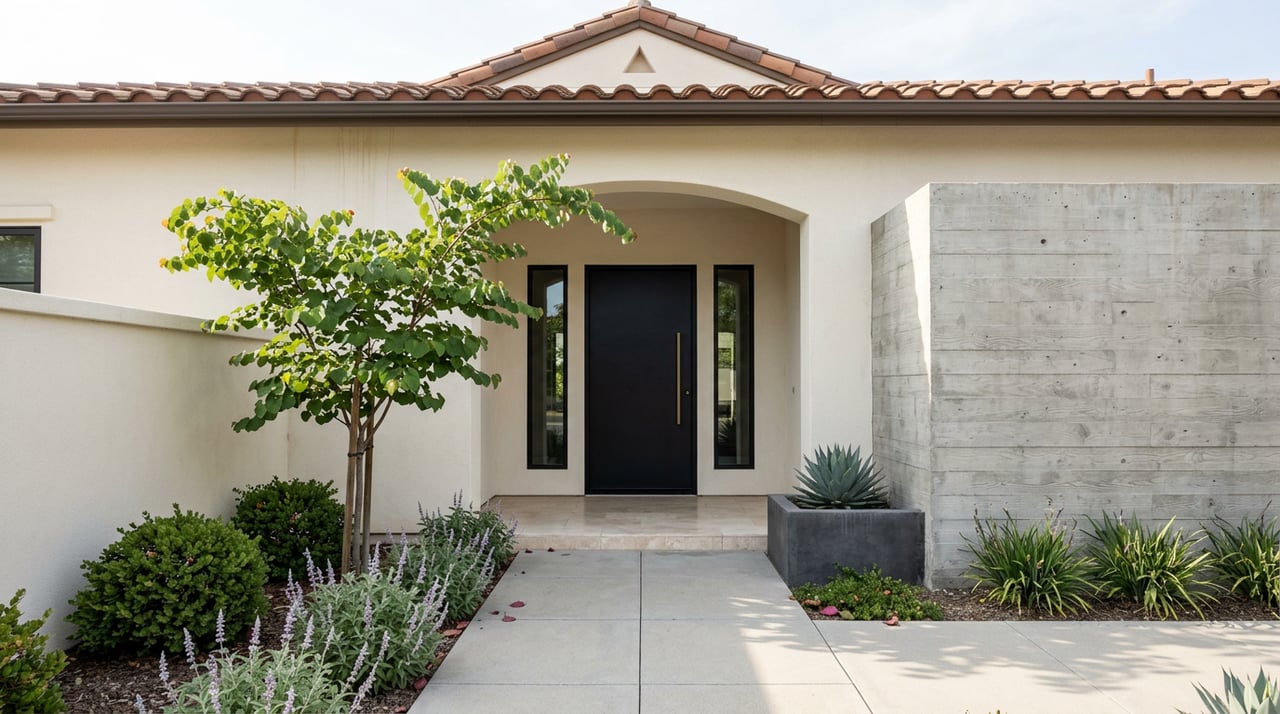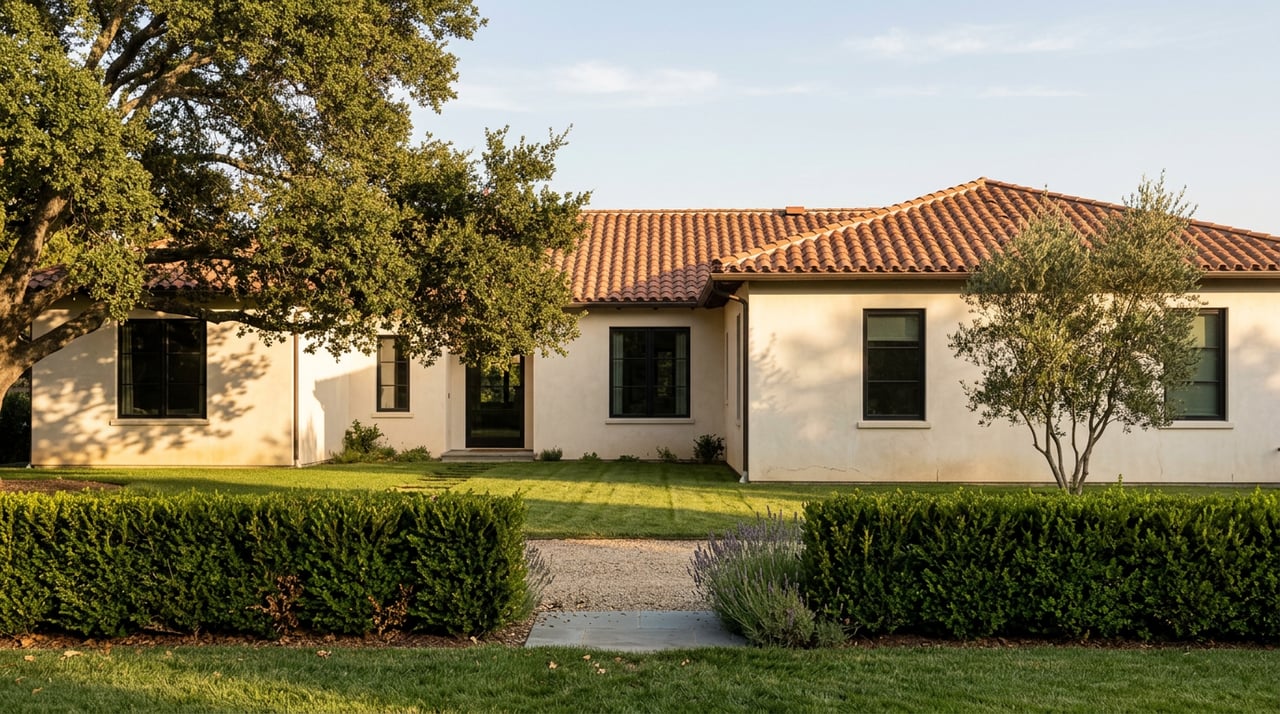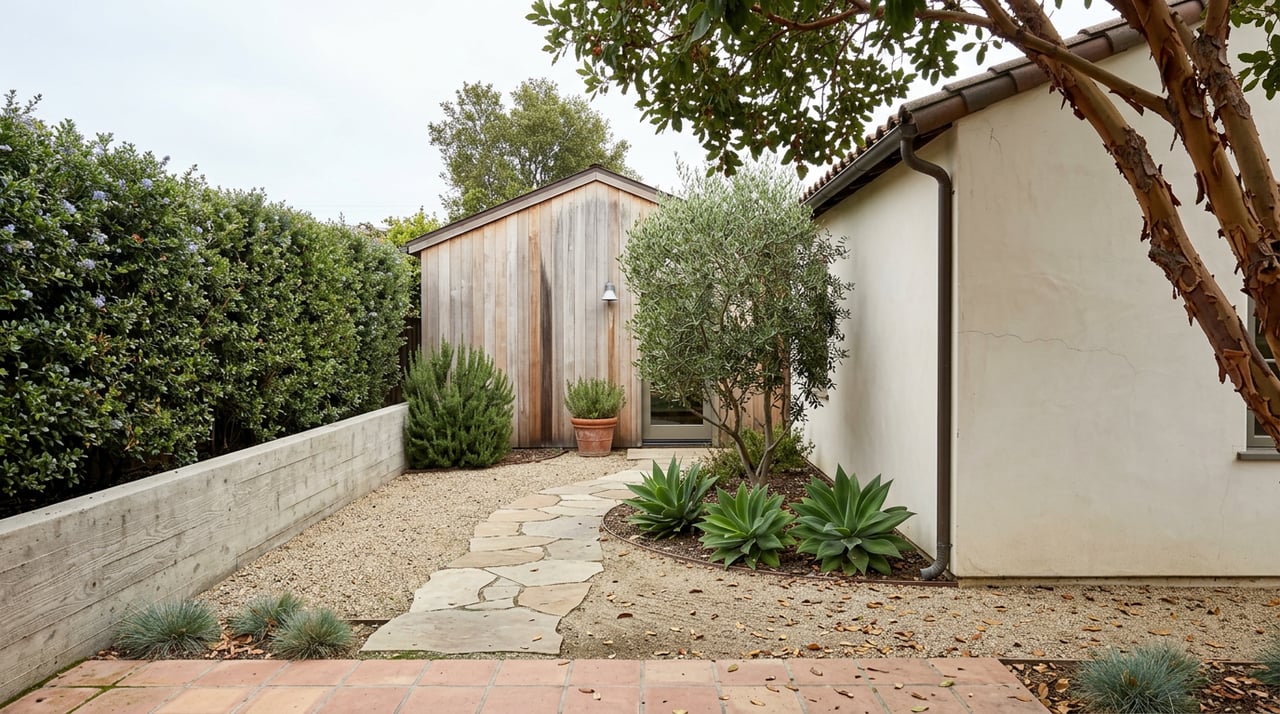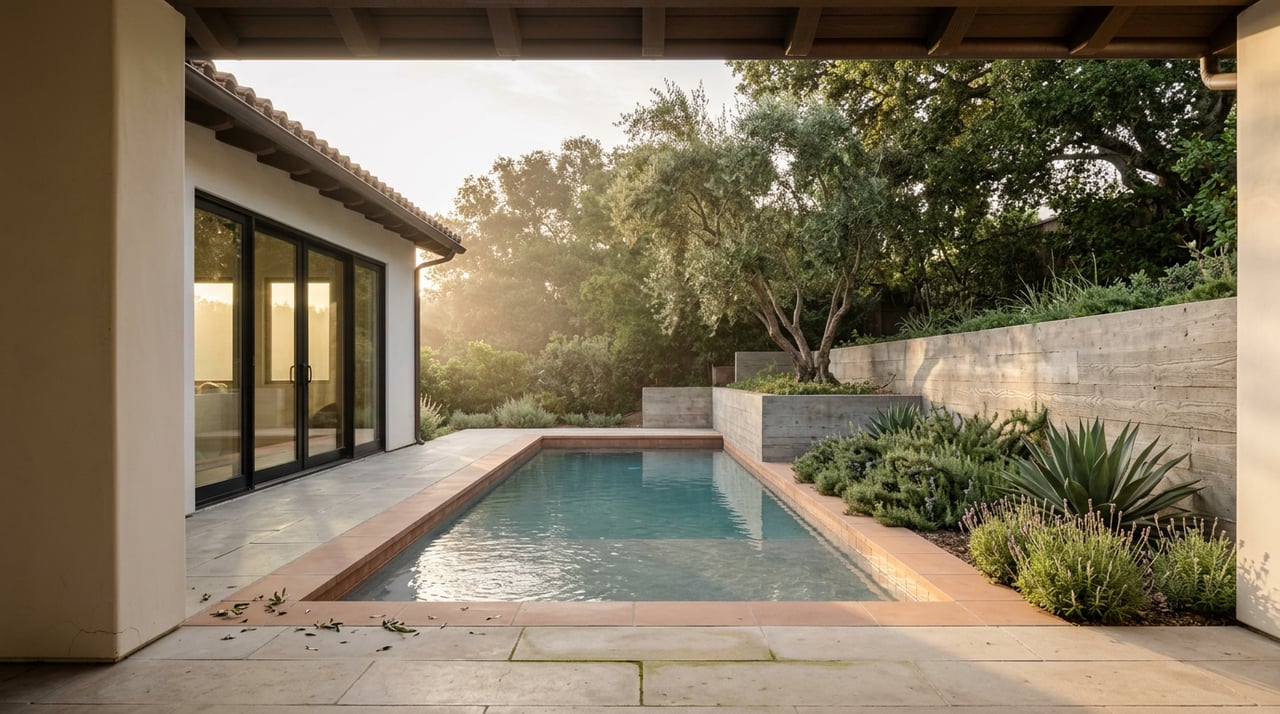
The volunteer board of the Chemeketa Park Mutual Water Company recently won approval for a $1.84 million state drought-relief grant to replace four aging water tanks in the Santa Cruz Mountains above town, financed in part through a $600,000 bridge loan from the Rural Community Assistance Corporation. Five miles down the hill, in late August 2026, homes in the 95032 zip code were closing near a fresh all-time-high median list price, with buyer demand strong enough that the town's tightest inventory numbers barely moved.
Both of these are, technically, the Los Gatos real estate market. The address line says so. But treating them as one market is exactly what leads buyers and sellers astray when they see a single median price quoted for the whole town. The number that matters here is not the median. It is the split beneath it, and the split has a mechanism: who owns the water, who owns the road, and who signs off on what you're allowed to build.
One Median Price, Three Very Different Markets
Pull the zip codes apart and the picture changes fast.
| Area | Zip codes | What the data showed in summer 2026 |
|---|---|---|
| Downtown / in-town Los Gatos | 95030, 95032 | Median list price hit a fresh all-time high near $3.69 million the week of August 24, still reading as a hot market despite inventory ticking up to 26 homes |
| Los Gatos Mountains | 95033 (unincorporated) | Local list-price and closed-sale tracking both read a slight buyer's market, with roughly 40 percent of active listings carrying a price reduction, up from a typical 30 percent |
| Monte Sereno | Mostly 95030 | So few monthly closings that the sale-to-list ratio swung from 111.9 percent in June to 95.5 percent in July, on a base of just three and six sales respectively |
Across the town as a whole, the three-month figure through May 2026 put the median sale price around $2.4 million, down from the year before even as price per square foot rose. That single number is doing a lot of work to describe a market where one submarket is setting records and another is absorbing price cuts.
The valley floor and the mountains are not just different price points. They are different transaction environments, and the difference starts underground.
The Water Under the Different Prices
Most homes in 95030 and 95032 connect to municipal water and sewer service. Many of the older mountain communities never did. Chemeketa Park, an unincorporated cluster of roughly 150 homes off Old Santa Cruz Highway, has drawn its water from Moody Gulch Creek since the Chemeketa Park Mutual Water Company incorporated in 1929, with a backup tie to the Montevina Pipeline operated by San Jose Water. The roads inside Chemeketa are private, maintained by the water company itself, not the county.
Summit Woods runs on its own Summit Mutual Water Company. Melody Woods Water Company, whose stated mission is simply to "provide water to local community," serves another pocket of the mountains. Villa Del Monte and the Redwood Estates Services Association manage still others. Each is a small nonprofit corporation, governed by a resident board, funded by member dues, and responsible for infrastructure that a city utility department would otherwise handle.
This is not a detail that shows up on a listing sheet as a line item, but it shows up in the transaction. Buying into one of these communities means buying a share in the water company along with the house, inheriting its dues, its maintenance schedule, and its capital plan. The Chemeketa tank replacement is a useful illustration: a $1.84 million infrastructure project, funded through a mix of grant and bridge financing, undertaken by the same volunteer board that also sets the monthly water bill for every household in the community. A buyer evaluating a mountain property is not just evaluating the house. They are evaluating the health of a utility they are about to join.
A Second Layer: Building or Remodeling in the Hills
Water and roads are the first friction point. The second shows up the moment a buyer wants to expand, remodel, or rebuild.
The Town of Los Gatos adopted its Hillside Development Standards and Guidelines in January 2004, and they apply to any hillside lot pursuing new construction or a major remodel, including applications that were already pending when the rules took effect. The process starts with identifying every constraint on a parcel, slope, geology, tree cover, drainage, and mapping what remains into what the town calls the Least Restrictive Development Area, the only portion of the lot where building is straightforward. Getting that determination right early can save months, because site-specific geotechnical and topographic studies are often required just to draw that boundary accurately.
From there, projects move through the town's Development Review Committee, and depending on scope, the Planning Commission, with appeals running up to the Town Council. None of this is unique to Los Gatos among Bay Area hillside communities, but it is a real cost and timeline factor that a buyer comparing a flat 95032 lot to a hillside 95033 parcel needs to price in before falling in love with the view.
What the Divergence Actually Means for You
None of this means the mountains are a lesser market. It means they are a different one, and the current data is telling two different stories at the same time for a reason.
If you are comparing a move from the valley floor to the mountains, the trade is real on both sides. You typically get more land and more separation from neighbors for the same dollar, and the current price-cut pattern in 95033 suggests more room to negotiate than you would find in a 95032 bidding situation right now. What you take on in exchange is due diligence that has nothing to do with square footage: confirming water company membership transfers cleanly, reviewing the private road agreement and its funding mechanism, and, if you plan to build, budgeting time for the Hillside Standards review rather than assuming a standard permit timeline.
If you are selling in the mountains right now, the rising price-cut rate is not a signal to panic. It is a signal that pricing precision matters more here than it does five miles downhill, where a hot market forgives a slightly aggressive number. A mountain listing that opens priced for the town's median rather than its own zip code's recent closings is the kind of listing that ends up in that 40 percent taking a reduction.
Before writing an offer on a Los Gatos Mountains property, it is worth getting clear answers on:
- How water company membership or shares transfer at closing, and what the current monthly dues and any pending capital assessments look like
- Whether the access road is privately maintained, and how repairs or replacement are funded among the homeowners who use it
- The septic system's most recent inspection and pumping records, since a system without documentation can complicate both negotiation and financing
- Whether any planned addition or remodel would trigger the Hillside Development Standards review, and if so, what a realistic timeline looks like before ground gets broken
FAQ
Is the Los Gatos Mountains market really cooling while town homes hit record prices? That is what the most recent local tracking shows. In-town 95030 and 95032 posted a fresh all-time-high median list price in late August 2026, while 95033 was independently reading as a slight buyer's market with a rising share of listings taking price cuts. Both readings come from the same season, which is the point: they are not describing the same market.
Do all Los Gatos Mountains homes rely on private water systems? Many of the established communities do, through member-owned mutual water companies like Chemeketa Park, Summit Mutual, Melody Woods, and others, each with its own infrastructure, dues structure, and governance. Coverage varies parcel by parcel, so this is worth confirming directly for any specific property rather than assuming it based on the general area.
Does the Hillside Development Standards process add real time to a remodel? It can, particularly for a first-time hillside buyer who assumes a mountain remodel moves like a valley-floor one. The standards require identifying site constraints and a Least Restrictive Development Area before design even begins, and depending on scope, the project may need sign-off from the Development Review Committee or Planning Commission. Building that timeline into your plans from the start avoids surprises later.
If you're weighing a move between downtown Los Gatos and the mountains above it, or trying to price a mountain property against a market that behaves nothing like the valley floor, Riese Real Estate Group works both sides of that line every week. Schedule a free consultation and we'll walk through what your specific zip code and parcel are actually telling you.